FRC — Team 751
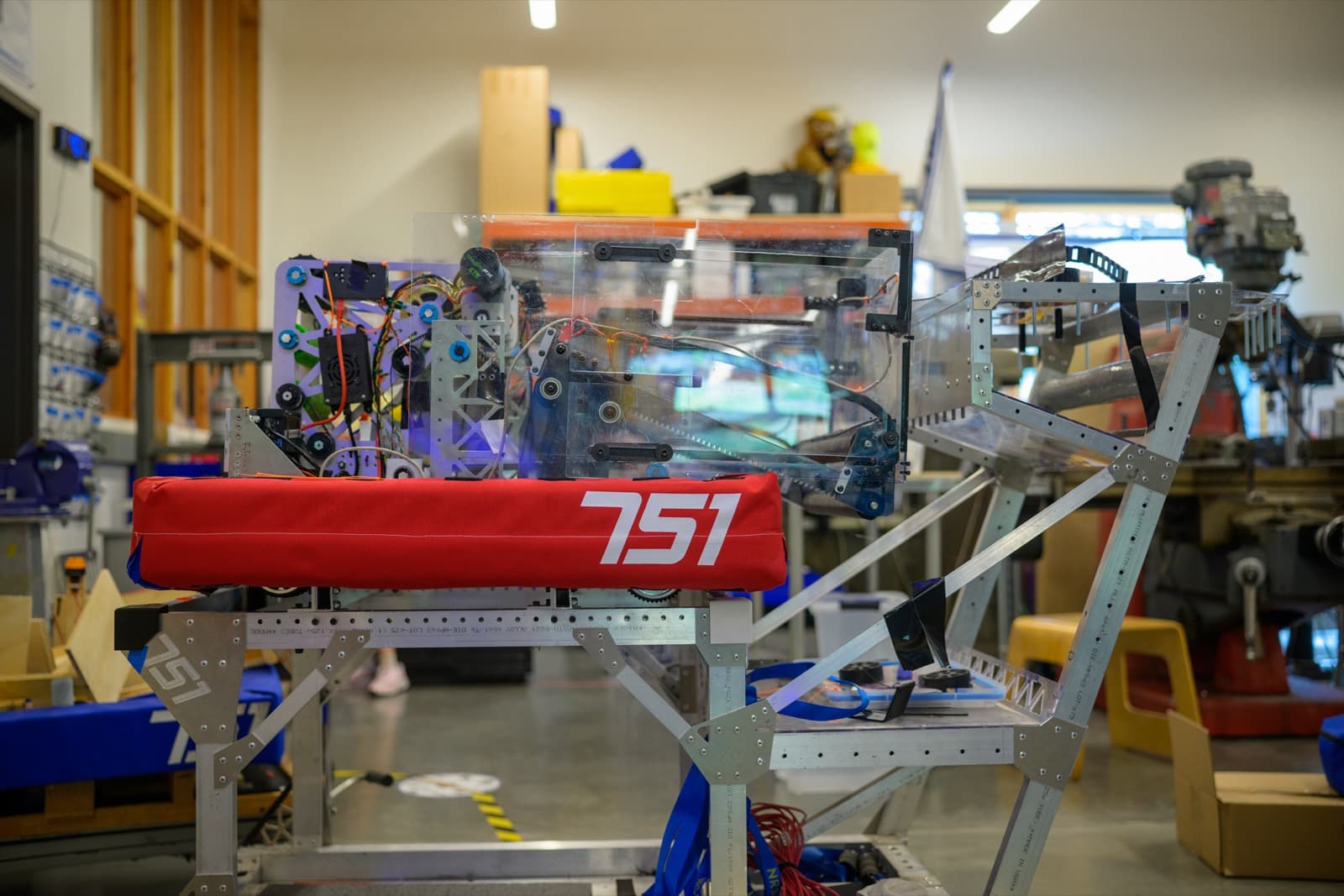
I joined my school's robotics team, Team 751 (Barn2Robotics), in 2023, my first year eligible as a freshman, and stayed on it through my senior year. Every season I owned a different subsystem, so the best way to tell the story is one component at a time. Each one taught me something the last one hadn't.
2023 — Intake & central holding chamber
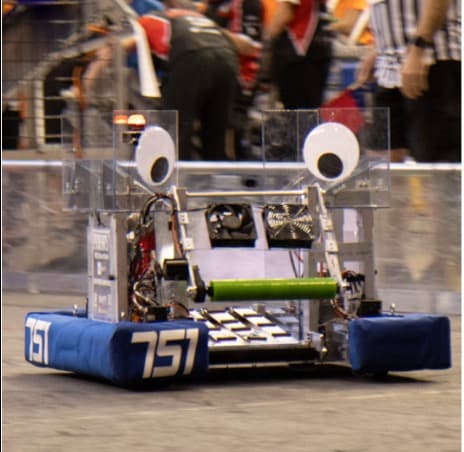
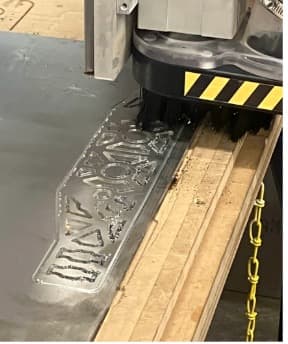
This was my first real project on the team, and like a lot of first projects, it was mostly a learning experience. It was my first time using SolidWorks for something this big, and my first time working with materials like polycarbonate and box tubing that had to be manufactured on mills, lathes, and the CNC machine. I over-built it, too many gussets, too many rivets, and I fought with the trigonometry to get the dimensions exactly right. Despite all that, it came out as a highly effective passive intake and central holding chamber that we leaned on constantly during competition.
2024 — Articulating intake
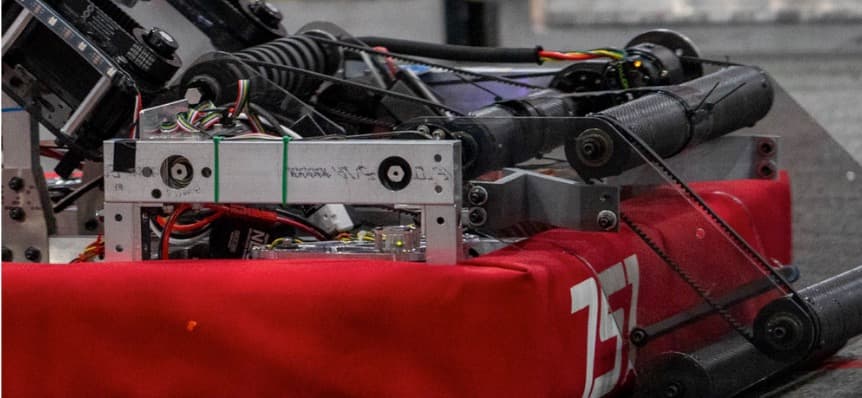
My second component was a real step up in complexity from the previous year's static design. This one had moving parts: a functioning wrist that let the intake pivot and extend beyond the frame to reach game pieces, and a set of polycarbonate rollers wrapped in sticky tape for grip. It also carried its own holding chamber, four powered rollers that funneled the game piece straight into the robot's shooter. This was where I got comfortable designing bespoke 3D-printed parts for a robotics context, and I pushed to make every component CNC-manufacturable so we could prototype faster and cut spares on demand.
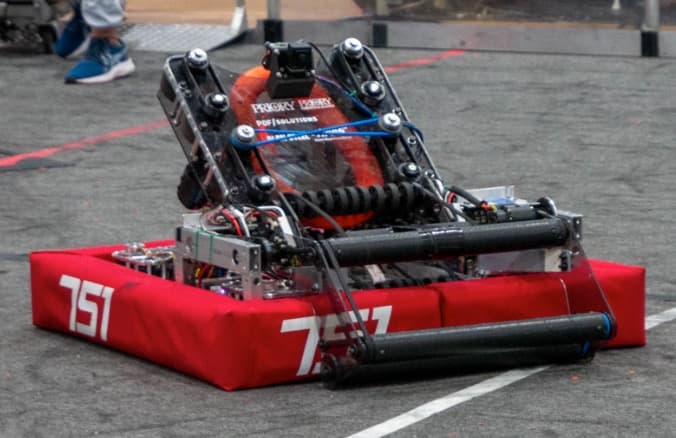
2025 — Intake V1
For the 2025 game, this intake had to grab a 4-inch-ID PVC tube and passively adjust to also take in an 18-inch kickball. It had a main body plus two arms, each carrying three powered rollers, joined to the body by a rotating joint and two gas shocks. That gave it two configurations: a standard intake position, and an expanded one where the gas shocks passively swung out of the way to make room for the kickball. A distance sensor and a beam-break sensor told us whether we were holding a game piece.
Sadly, this one never worked right in competition, it just couldn't reliably acquire the PVC tube. It was a hard lesson, but a valuable one: test your systems early, and never treat a clean CAD model as proof that something will actually work.
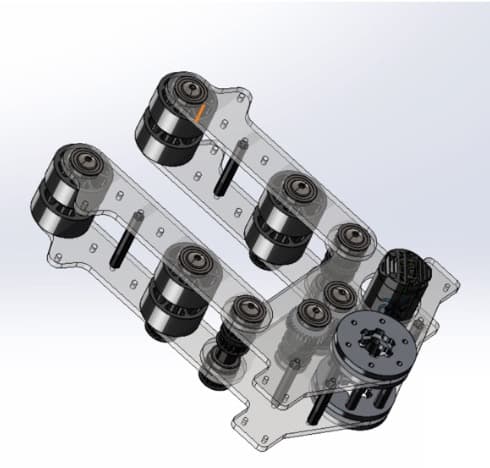
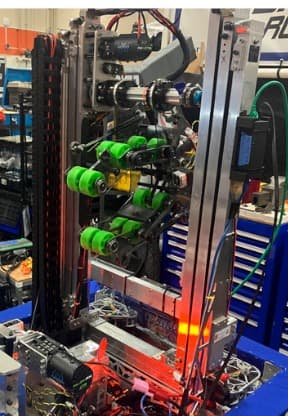
2025 — Intake V2
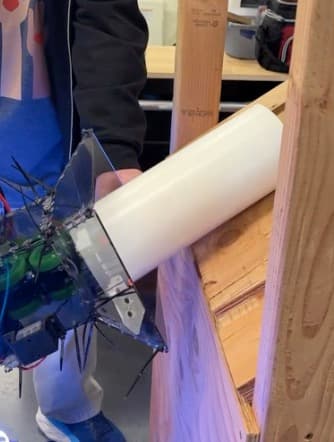
After V1 failed, a full redesign was the only option. I took the initiative to re-brainstorm, re-design, and re-build a completely new intake from scratch in just under 10 days. Like V1 it used mobile compliant wheels to collect the game piece, but I made one key change: instead of gripping the piece from the outside, the wheels held it from the inside, which gave a far more secure grip. A distance sensor again handled detection. More than anything, this was a lesson in time management and adaptability, making the most of the resources I had under real pressure.
2025 — Elevator
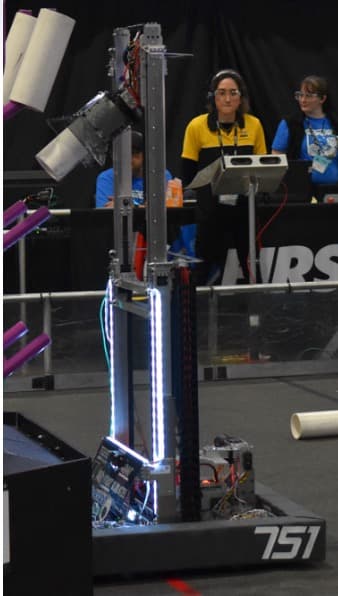
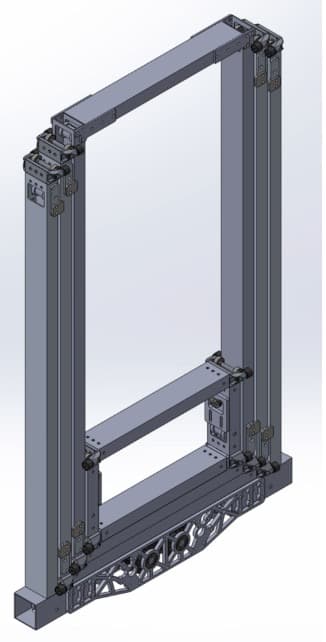
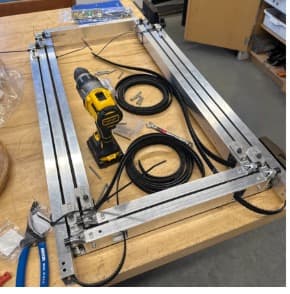
This one was new territory for the whole team, the first time in nearly six years we'd put an elevator on a robot. Inspired by belt-rigged designs, I ran the rigging inside the tube to keep everything clean and clutter-free, and built a tensioning system to keep the motion smooth. It pushed me to think outside the box and to work with complex billet parts to make a fully functioning elevator.
2026 — Intake & hopper
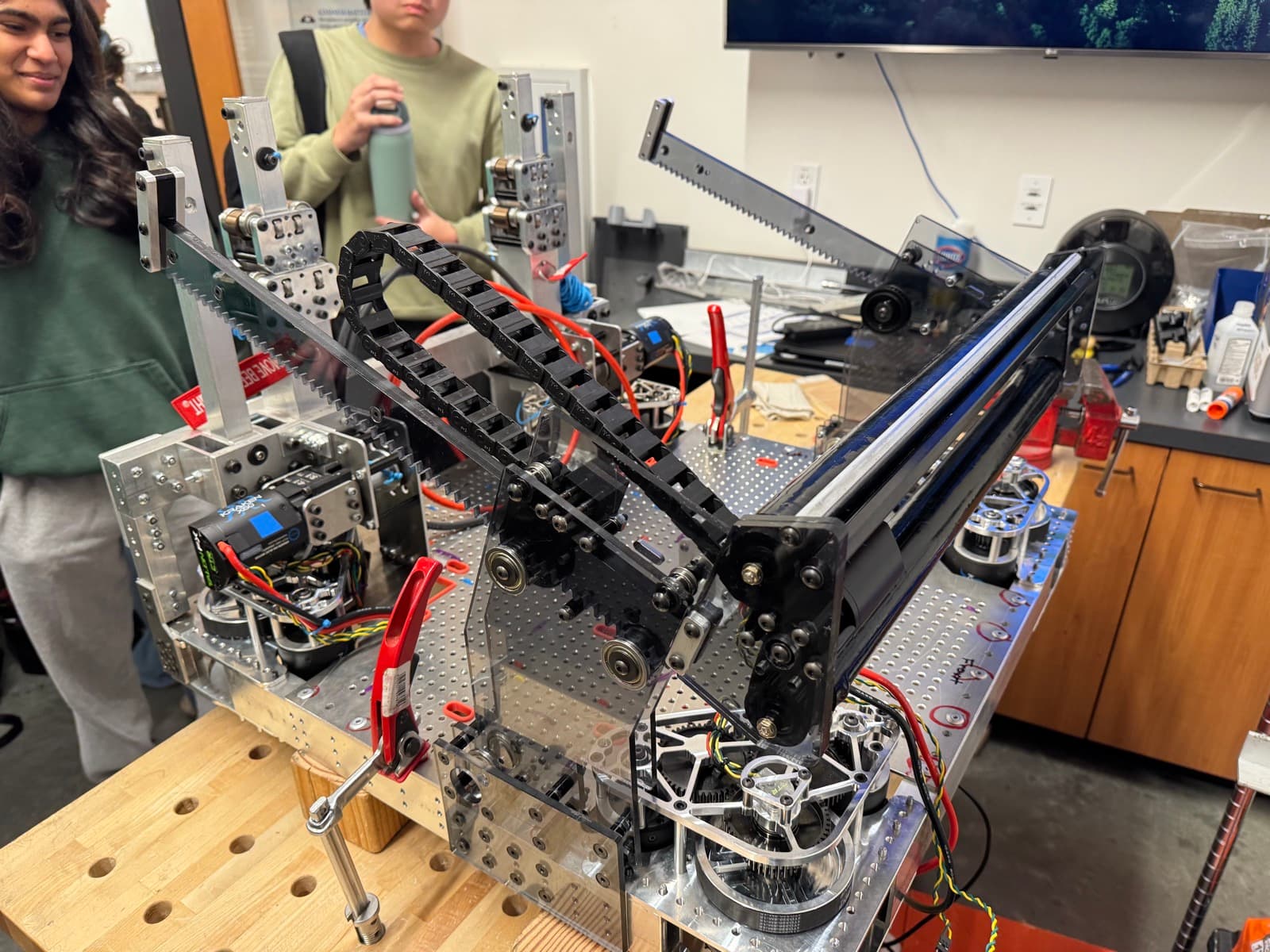
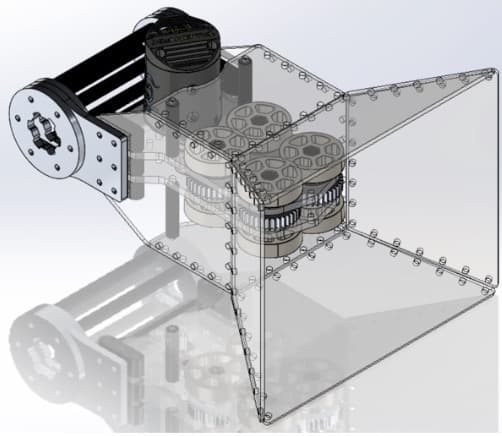
This year's game was all about picking up as many dodgeball-sized yellow foam balls as possible and shooting them into a hoop-like target. I was in charge of the intake, so my goal was to grab as many balls as fast as possible while keeping the footprint and weight down. For the extension mechanism I went with a rack and pinion, with both sides linked so they'd extend in sync, driven by a series of belts and gears. A set of high-speed silicone-covered rollers, running the full width of the robot, did the actual intaking.
I also built the hopper, the ball storage. It's a three-sided polycarbonate enclosure tied to the intake through a vertical slot, so the intake can move both horizontally and vertically while the hopper tracks it horizontally. This was my final component for the team, and it taught me two things at once: how to pave my own way on a design, and how much it matters to pass what you know down to the next generation of component leads.